

Meet The Faculty
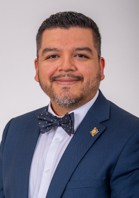
Ricardo Lopez Castellanos, MD
Dr. Ricardo Lopez Castellanos is a neurologist specializing in movement disorders and
autonomic disorders at the Medical University of South Carolina (MUSC) in Charleston,
SC. He is the Director of the Autonomic Neurophysiology Laboratory. His clinical work
focuses on the intersection of autonomic dysfunction in Parkinsonian disorders, as well as
the development of interdisciplinary care for patients with these conditions. Dr. Lopez
earned his medical degree from Universidad Dr. José Matías Delgado in El Salvador,
followed by a clinical research fellowship in Movement Disorders at the University of
Cincinnati. He then completed his Neurology residency at the University of Arkansas for
Medical Sciences, followed by fellowship training in Movement Disorders at Emory
University in Atlanta, GA, and Autonomic Disorders at Beth Israel Deaconess Medical
Center, Harvard Medical School, in Boston, MA. He serves on the Education Committee of
the American Autonomic Society and as a Social Media Board Member of the International
Parkinson and Movement Disorder Society. He is passionate about medical education for
trainees, as well as patient education and outreach, particularly within Spanish-speaking
communities in the U.S. and Latin America.
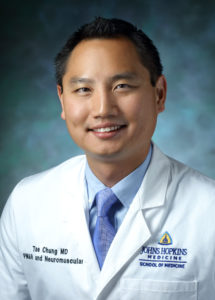
Tae Chung, MD
Dr. Tae Chung is an Associate Professor of Physical Medicine and Rehabilitation at
Northwestern University and a physician-scientist at Shirley Ryan AbilityLab, specializing in
neuromuscular and autonomic disorders. He completed his residency in Physical
Medicine and Rehabilitation and fellowship training in Neuromuscular Medicine at Johns
Hopkins University. In 2017, he founded the Johns Hopkins POTS Clinic Program and
subsequently established the Johns Hopkins Autonomic Nerve Laboratory. His clinical and
research interests focus on postural orthostatic tachycardia syndrome (POTS), peripheral
autonomic neuropathies, and the mechanisms and rehabilitation of autonomic
dysfunction. He has led and collaborated on multiple NIH- and industry-sponsored clinical
trials in POTS and Long COVID. He is the director of the POTS and Autonomic Medicine
Program at Shirley Ryan AbilityLab.

Glen Cook, MD, FAAN
Dr. Glen Cook is an Associate Dean for Regional Education and Associate Professor of
Neurology at the Uniformed Services University School of Medicine. He is also the Director
of Neurology Services and a Staff Neurologist at Naval Medical Center Portsmouth in
Portsmouth, VA. Dr. Cook previously served as the Neurology Residency Program Director and, prior to that, the Clinical Neurophysiology Fellowship Program Director at Walter Reed National Military Medical Center in Bethesda, Maryland. Dr. Cook received his Doctor of Medicine with Distinction in Service from the University of Michigan Medical School. He completed a fellowship in Autonomic Disorders in the Clinical Neurocardiology Section of the National Institute of Neurologic Disorders and Stroke at the National Institute of Health followed by a fellowship in Clinical Neurophysiology. Amongst many awards, he is a two-time recipient of the Department of Defense’s Joint Service Commendation Medal and a recipient of the Defense Meritorious Service Medal. He is also a member of several
professional medical associations including the American Autonomic Society.

Elisabeth Golden, MD
Dr. Elisabeth Golden is a neurologist with additional subspecialization in neuromuscular
and autonomic disorders. She completed medical school, residency, and fellowship
training at the University of Texas Southwestern Medical Center before joining the faculty
there. She moved to East Texas in 2022 and is currently an associate professor at the
University of Texas at Tyler practicing hospital neurology. Dr. Golden’s academic interests
include multidisciplinary collaboration in the treatment of neuromuscular and autonomic
disorders, teaching the broader medical community about autonomic disorders, and
resident education.
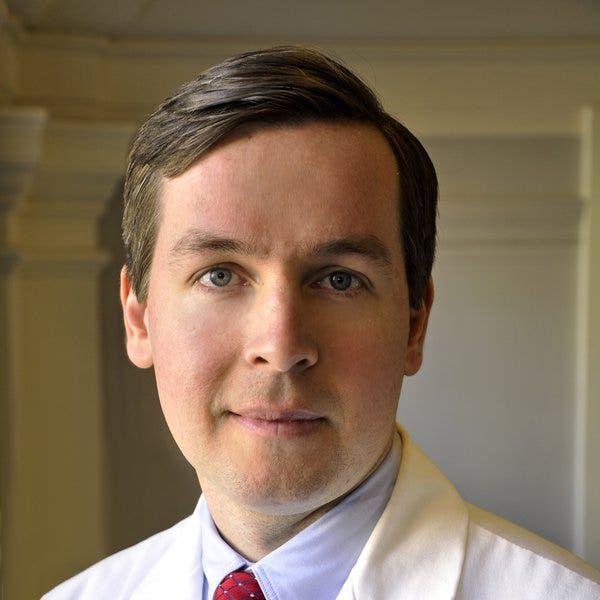
Matthew Hamilton MD
Dr. Matthew Hamilton is the lead gastroenterologist for the Brigham Mastocytosis Center
and also serves as the director of the inflammatory bowel disease (IBD) fellowship program
and IBD education programs at the Brigham and Women’s Hospital Crohn’s and Colitis
Center. He is the clinical chief of gastroenterology at Brigham Faulkner Hospital and
Assistant Professor of Medicine at Harvard Medical School. He completed his medical
residency at Boston Medical Center and gastroenterology fellowship at the Brigham where
he began his interest in mast cell biology working in the laboratory of Professor Richard
Stevens. He now focuses his clinical research and clinical care expertise on
gastrointestinal manifestations of mast cell disorders and associated conditions including
autonomic dysfunction.

Kelsey Klaas, MD
Dr. Kelsey Klaas is a pediatrician in the division of General Pediatric and Adolescent
Medicine at Mayo Clinic Children’s in Rochester, Minnesota. She is a graduate of the
University of Minnesota Medical School, and completed her pediatric residency at Mayo
Clinic, followed by a year as chief resident. Her practice includes care of children with
complex health conditions. Dr. Klaas is the medical co-director of the Mayo Clinic Pediatric
Pain Rehabilitation Center. She is the Pediatric Clerkship Director for the Mayo Clinic Alix
School of Medicine.
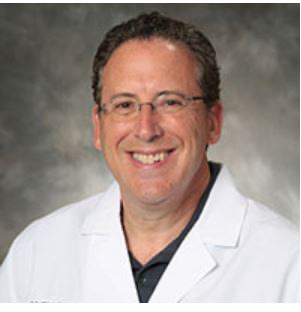
Howard Snapper, MD, FACC
Dr. Howard Snapper is a cardiologist and the Director of the Autonomic Disorder Division
and Autonomic Lab for Wellstar Cardiovascular Medicine in Woodstock, GA. He has over
30 years of experience in cardiology and over 10 specializing in autonomic medicine. Dr.
Snapper received his medical degree from the University of Massachusetts Medical
School, completed an Internal Medicine Residency at Northwestern University Medical
Center in Chicago, and then a Cardiology Fellowship at Tufts University School of Medicine
in Boston. He received his UCNS certification in Autonomic Disorders in 2018 and serves
as the Chairman of the POTS Section of the American Autonomic Society.